Glynt - Earn Rewards
- 4.2
- Rating
- 100.00K
- Installs
- Free
- Price

 Analysis by App-foxy
I tried Glynt as a small household rewards app rather than treating it like a serious income source, and that distinction matters. Its basic idea is simple: play games, answer surveys, and collect rewards through one lifestyle-focused app. In practice, I found it most interesting when used by one person who wants a little structure around spare-time activities, or by adults sharing a device while keeping their own decisions and accounts separate. It is free to install, but the real cost is attention: you spend time on activities before any reward feels worthwhile.
Glynt is developed by Glynt and has built a solid enough audience to pass one hundred thousand installs, with an average rating of 4.2 from roughly five hundred ratings. I would not read those figures as a promise of identical results for everyone, but they do suggest that the concept is understandable and useful to a meaningful group of users. The app belongs to the Lifestyle category, and its Mature 17+ rating is an important part of deciding whether it belongs on a shared household phone.
How Glynt fits into everyday household use
When I think about Glynt in a household, the useful question is less about sharing one screen and more about deciding when the app fits without interrupting everyone else. I’d treat it as an optional activity for a quiet pause, not something that needs a place in the family routine. That makes it easier to weigh its convenience against the time and attention it asks for.
You May Also Like

 Pandora - Music & Podcasts
Pandora’s Music Is Easy to Start, but Harder to Recover
Pandora’s strength is its low-effort path from a seed to a station. Its weak spot is how much confidence it asks you to place in connection, setup, and quiet recovery.

 AccuWeather: Weather Radar
AccuWeather Review: A Quick, Clear Forecast for Everyday Decisions
For everyday plans, the best forecast is the one you can understand quickly. AccuWeather makes rain timing, radar, and local conditions easy to act on, with a few trade-offs.

 Hill Climb Racing
Why Hill Climb Racing Still Turns Crashes Into One More Run
A tiny car, a bumpy hill and one more upgrade: Hill Climb Racing keeps resurfacing because its simple chaos makes every near-miss feel personal.

 AliExpress - Shopping App
AliExpress Makes Global Shopping Feel Personal, but Shoppers Bear the Risk
AliExpress turns a global marketplace into a pocket-sized discovery engine. Its reach is useful, its shopping loop compelling, and its trade-offs easy to miss.

 Lords Mobile: Kingdom Wars
Lords Mobile Is a Kingdom-Building Routine, Not a Quick Match
A case-by-case verdict on the building, battles, device demands, and social commitments that make Lords Mobile rewarding for some players and exhausting for others.

 PDF Scanner app - TapScanner
TapScanner Makes Paperwork Easier to Capture, Check, and Share
TapScanner makes scanning with a phone feel less like a rescue operation and more like a dependable step in getting work done. Its capture tools are useful, though not flawless.
More From Our News Desk
View All News


A realistic shared-device routine
Imagine a household with one Android phone or tablet that moves between adults during the evening. One person has a few minutes after dinner and opens Glynt to look for a survey. Later, another adult uses the same device for a game-based activity. That arrangement can work only if both people treat the app as a personal rewards account rather than a communal points jar. The device may be shared, but the activity history, eligibility, and reward expectations should not be mixed casually.
My preferred routine would be straightforward: one adult uses the app, checks what is available, and records which activities were started. If another person needs the device, they should finish the current session or leave it clearly marked as incomplete. This is not glamorous advice, but rewards apps become confusing quickly when two people answer questions, play games, or check progress without knowing what the other person has already done.
The strongest household use case is therefore coordinated spare-time use, not simultaneous use by several people. Glynt can give an adult something purposeful to do while waiting for an appointment, riding public transport, or taking a short break. It is less suitable as a family entertainment hub where everyone expects a shared balance or a group challenge.
What I would do before handing over the device
Before another person uses the phone, I would close the current activity and make a note of whether it was a survey, a game task, or a reward-related screen. I would also avoid leaving the app open on a page that reveals personal answers or account details. These are ordinary privacy habits, but they matter more here because surveys can involve personal preferences and the app is designed around an individual’s activity.
I would not let a child casually take over an adult’s session. The age context makes that especially important. The Mature 17+ label means this is not an app I would place in a child’s hands simply because some activities look like games. A game-like task does not change the audience rating, and a shared device does not remove the responsibility of the account holder.
Another useful habit is to separate “trying an activity” from “expecting a reward.” When I open Glynt, I treat the available tasks as optional ways to use spare time. I do not promise anyone in the household that a particular activity will produce a fixed return, because the experience depends on what the app presents and whether the user completes the relevant steps. That mindset prevents the most common source of disappointment: turning a casual rewards app into a household budget plan.
Account boundaries are more important than the shared screen
Glynt makes more sense when one person remains responsible for the account. If several adults share one login, it becomes difficult to remember who completed a survey, which game activity was started, or why a reward balance changed. Even when everyone is acting honestly, mixed activity can make the record hard to interpret.
For a shared phone, I would choose one of two clean arrangements. The first is a single adult user who manages the app and does not invite others to perform activities under that account. The second is separate personal use on separate devices or clearly separated accounts, where each person handles their own activity. The better option depends on the household, but the principle is the same: shared hardware should not mean shared identity.
This boundary also helps with surveys. Answers are supposed to reflect the person completing them, not whichever family member happens to be holding the phone. If two people with different habits and opinions answer under one profile, the experience becomes less coherent for the account holder. I would especially avoid letting a teenager answer on an adult’s account, both because of the age rating and because the profile no longer represents one person accurately.
There is a practical benefit too. Keeping one user responsible makes it easier to decide whether an activity was worth the time. If the account holder knows exactly what they played or completed, they can identify which parts of Glynt fit their routine and which ones are better ignored. A shared account removes that useful feedback.
Coordinating game activities without turning them into chores
The game side is likely to attract people who prefer doing something interactive instead of filling out questionnaires. I found that the best approach is to set a short personal limit before starting. For example, I might use a spare break to test one activity, then stop if the instructions or progress do not feel clear. This protects the app’s main advantage—making idle time more engaging—without allowing it to take over the evening.
In a household, coordination should focus on device availability rather than competing for rewards. If one person is already playing through an activity, another can use the time to decide whether surveys are a better fit on their own device. Trying to pass the same session between people is more likely to create confusion than cooperation.
I would also avoid treating game progress as transferable household progress. A person who enjoys games may be willing to spend more time than someone who only wants a quick survey. Their expectations are different, so combining their efforts into one informal family total makes the result difficult to judge. Glynt works better when each user chooses activities according to their own patience and interests.
One non-obvious trade-off is that the most entertaining option may not be the most efficient use of time. A game can feel more enjoyable than a survey while still requiring more attention. Conversely, a survey may be quicker but less pleasant, and it may not always be available when needed. I would compare activities by the quality of the break they provide, not just by the possibility of earning something. That is a more realistic way to use the app and keeps the experience from becoming a frustrating hunt for the “best” task.
Surveys require a calmer, more careful approach
Survey users should expect to read questions carefully and answer consistently. Rushing through a questionnaire while distracted by household noise is a poor strategy. If I am interrupted, I would rather stop and return later than tap through answers simply to finish. Accuracy matters to the quality of the personal experience, and careless responses make the activity feel less worthwhile.
Shared-device use creates an extra problem: another person may see questions that were meant for the account holder. I would complete surveys privately, especially if the subject feels personal. I would also avoid discussing answers in front of children or treating the questionnaire as a group game. Glynt’s Mature 17+ context supports that more cautious approach.
A practical tip is to use the app when you have enough uninterrupted time to understand what you are doing. Waiting in a queue can be ideal if the queue is predictable. A rushed moment between household tasks is less suitable because an interruption can leave the account holder unsure about what was completed. This is a small workflow change, but it makes the app feel more controlled and less like a source of unfinished business.
Age, trust, and the adult-user question
The Mature 17+ rating should guide household decisions from the start. I would not present Glynt to a younger child as a harmless game collection, and I would not let a child use an adult’s profile to complete activities. The fact that the app includes games does not make it child-oriented. Adults should decide whether the app’s content and reward model are appropriate for the person using it.
Trust also matters between adults. A shared device can create the impression that everyone should be free to explore the same account, but that is not a good assumption here. The account holder should know who is using it, what kind of activity they are completing, and whether personal information may appear on screen. This is especially relevant in households where phones are left unlocked or passed around frequently.
I would explain the arrangement plainly: one person owns the account, one person answers surveys, and any other user should use their own account or device. That conversation may sound overly formal for a free lifestyle app, but it prevents arguments later. Rewards are small enough that confusion is rarely worth the trouble, while personal answers and account access deserve more care.
For adults who want to introduce the idea to an older teenager, I would make the age requirement part of the decision rather than an afterthought. The teenager should understand that the app is not guaranteed income, that activities take time, and that account information should not be shared casually. If those expectations cannot be maintained, Glynt is better left off the shared device.
Where Glynt is stronger than usual alternatives
Compared with using a separate survey app and a separate game-rewards app, Glynt has a clear convenience advantage: it brings both kinds of activity into one place. I like that because my mood changes. Sometimes I want a quick question-based task; at other times, I would rather interact with a game. Keeping those possibilities together reduces the need to manage several unrelated apps.
That convenience comes with a trade-off. A specialist survey service may feel more focused to someone who wants only questionnaires, while a dedicated game-rewards service may suit a person who wants only gameplay. Glynt is better for flexibility than for deep specialization. If I already know exactly which type of activity I prefer, a more focused alternative may feel simpler.
It also differs from cashback or receipt apps, which usually fit naturally into shopping routines. Glynt is based on spare-time participation rather than purchases already planned. That means it can be used when I am not shopping, but it also means I must actively spend time inside the app. Someone who wants rewards with almost no extra activity may prefer a shopping-linked option instead.
Against ordinary mobile games, Glynt adds a practical reason to try an activity, but it may not offer the same depth as a game chosen purely for entertainment. I would not replace a favorite premium game with it if the main goal is story, strategy, or long-term play. Its appeal is the combination of light engagement and possible rewards, not a promise of a complete gaming experience.
What the current release feels like in use
The app is currently on version 2.7.4 and supports Android 8.0 or later. That makes it accessible to many people using older Android hardware, which is useful for a household device that is no longer the newest phone. Still, an older phone may make game activities less comfortable if performance, battery life, or screen size is limited. The minimum operating-system support does not guarantee that every device will feel equally pleasant.
I would install it only on a device that the account holder can manage confidently. A spare phone can be convenient, but it should not be treated as a neutral communal terminal. Whoever installs Glynt should understand that the app is tied to personal activity and should keep the device protected with the household’s normal screen-lock habits.
The free price lowers the barrier to testing it, but “free” should not be confused with effortless. The user pays with time, attention, and sometimes patience while deciding which activities are worthwhile. My advice is to try it during time that would otherwise be idle, not during time reserved for work, study, sleep, or family conversation. That single rule improves the experience more than chasing every available opportunity.
Who should use it, and who should skip it
I would recommend Glynt to an adult who enjoys switching between surveys and game-related activities, wants one place to explore both, and is comfortable treating rewards as a bonus rather than a dependable payment. It is also a reasonable fit for someone using an older Android device who wants a lightweight way to make waiting time feel more purposeful.
I would be more cautious with anyone who dislikes questionnaires, expects immediate value, or becomes frustrated when an activity takes longer than expected. The app is not a good match for someone looking for guaranteed earnings, a shared family points system, or a child-friendly entertainment app. It is also not ideal for a household that cannot maintain clear account boundaries.
The app’s rating of Mature 17+ makes the age decision straightforward for me: I would keep use with adults and treat any younger person’s interest as a reason to explain the boundary, not as an invitation to share the account. That is a practical limitation, but it is also useful guidance. Not every free app belongs on a family tablet simply because everyone can physically open it.
My household verdict
After using Glynt with a household mindset, I see it as a personal spare-time tool that can coexist with shared-device routines if the boundaries are clear. Its combination of games and surveys is more convenient than juggling separate reward apps, and the free entry point makes experimentation easy. The developer, Glynt, has shaped the app around a simple idea, but the user still has to decide whether the time spent feels worthwhile.
My final recommendation is to assign one responsible adult to the account, keep survey answers private, avoid passing sessions between family members, and use the app only during genuinely free moments. Those steps address the main friction points without making the experience complicated. I would not build a household budget around it, and I would not present it as a children’s game service.
Glynt is at its best when it stays small, personal, and optional. Used that way, it can turn an otherwise empty break into a choice between a survey and a game activity, while keeping expectations realistic. If your household can respect the Mature 17+ boundary and separate personal accounts from shared hardware, it is worth trying. If you want a family rewards pool, deep gaming, or predictable income, I would choose a different type of app.
FAQs for Glynt - Earn Rewards
01What is Glynt - Earn Rewards, and how does it work?
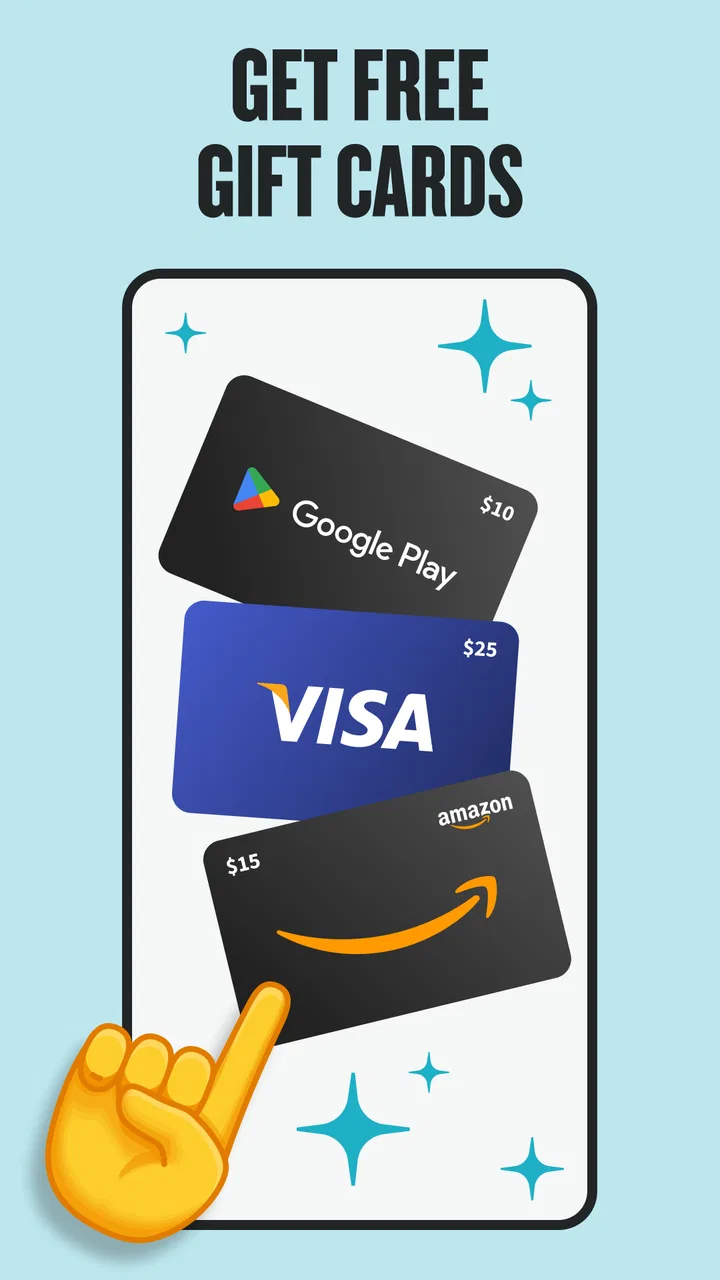
Glynt - Earn Rewards is a rewards app that lets users complete available activities, such as surveys, offers, or other promotional tasks, in exchange for points or credits. After reaching the required redemption threshold, eligible users may be able to exchange their balance for supported rewards. Available tasks, earning rates, and redemption choices can vary by country, account, and current promotions.
02Is Glynt - Earn Rewards free to download and use?
The app can generally be downloaded without an upfront purchase, but users should still review its terms before participating. Some offers may redirect you to third-party websites or require specific actions, subscriptions, purchases, or personal information. Read each offer carefully, check cancellation conditions, and avoid spending money solely to earn rewards unless the potential value and requirements are completely clear.
03How can I redeem rewards in Glynt - Earn Rewards?
Redemption normally depends on accumulating enough eligible points and meeting the app’s account and verification requirements. The available reward methods may include digital gift cards, cash-like payouts, or other options, but these can differ according to location and account status. Before completing tasks, check the current minimum balance, processing time, expiration rules, and any restrictions shown inside the app.
04Is Glynt - Earn Rewards available in every country, and who can use it?
Availability is not necessarily identical worldwide. The number of tasks, reward values, payment methods, and eligibility rules may depend on your country, age, device, and advertising partners. Some activities can disappear when there are no matching campaigns. Users should confirm the app’s regional availability in the Google Play Store or App Store and read the age and identity-verification requirements before creating an account.
05Is Glynt - Earn Rewards safe to use?
As with any rewards platform, use Glynt carefully and review the permissions, privacy policy, and terms of service before signing up. Only provide information that is genuinely required, avoid sharing passwords or payment credentials through suspicious links, and be cautious with third-party offers. Rewards are not guaranteed, and users should understand how their data may be collected, shared, or used for personalized advertising.
Pros
- Simple interface makes earning opportunities easy to browse.
- Multiple reward options can suit different user preferences.
- Short tasks are convenient for filling spare moments.
- Progress toward rewards is generally easy to track.
- May offer extra bonuses for consistent daily activity.
Cons
- Reward availability may vary by location and user profile.
- Some tasks can have limited spots or disappear quickly.
- Earnings may be modest compared with the time required.
- Cash-out thresholds can delay access to your rewards.
- Frequent notifications may feel distracting for some users.

Glynt - Earn Rewards
Gallery